


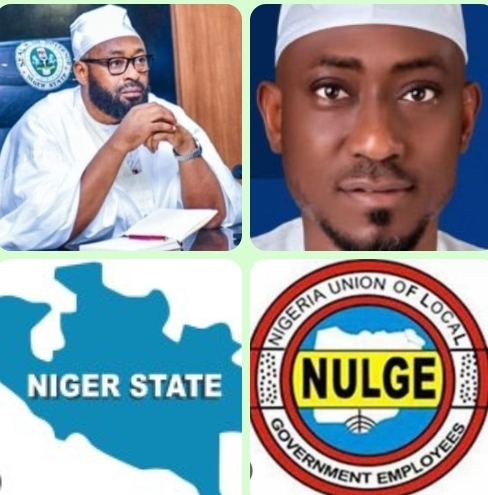
ANALYSIS:
ON HOW GOVERNOR MOHAMMED UMARU BAGO SUFFOCATES NIGER STATE LOCAL GOVERNMENT ADMINISTRATION UNDER THE JOINT ACCOUNT POLICY IN THE STATE,
BY YAKUBU MUSTAPHA BINA
Niger State was created on February 3, 1976, by General Murtala Rahmat Mohammed from the defunct North-Western State. Known as “The Power State,” Niger is Nigeria’s largest state by landmass and is historically significant for housing major hydroelectric facilities and being home to traditional pre-colonial empires.
Before British rule, the territory comprising modern-day Niger State was home to diverse and independent ethnic groups and powerful traditional states. The southern region was primarily dominated by the Nupe Kingdom, a centralized state that experienced varying periods of influence and power. In the east, the Gbagyi, also known as Gbari, had organized states.
During the early 19th century, parts of the region were integrated into the Sokoto Caliphate following the Fulani Jihad, leading to the establishment of the Kontagora and Nupe Emirates.
The British occupation of the region commenced in the early 1900s. In 1908, the British administration created Niger Province, which later became known as Nupe Province between 1918 and 1926. A major turning point in the area’s development was the construction of the railway, particularly the Baro-Kano railway line in 1911, which passed through Minna. This transformed Minna from a minor Gbagyi settlement into a vital administrative and commercial hub and eventually made it the headquarters of the old Niger Province.
Upon Nigeria’s independence in 1960, the area was part of the Northern Region. In 1967, it was incorporated into the newly created North-Western State. On February 3rd, 1976, the military government of General Murtala Mohammed established Niger State as a distinct geopolitical entity. Minna was selected as the state capital because of its strategic location and accessible railway infrastructure. In 1991, during the administration of President Ibrahim Babangida, the Borgu region was transferred from Kwara State to Niger State, expanding its total territory to its current size of over 76,000 square kilometres and making it the largest state in Nigeria.
Niger State plays a pivotal role in the country’s power infrastructure, earning its nickname, “The Power State,” because it houses major national hydroelectric dams, including Kainji, Shiroro and Jebba. The state is also heavily driven by agriculture and has historically been an important political centre, serving as the home state of two former Nigerian Heads of State, General Ibrahim Badamasi Babangida and General Abdulsalami Alhaji Abubakar, both of whom are retired and still alive.
But despite this enormous economic, geographical and historical significance, enhancing grassroots governance has remained a major challenge in Nigeria, and Niger State is no exception. None of the 36 states currently operates full and uncompromised Local Government autonomy, despite the landmark July 2024 Supreme Court judgment mandating direct financial allocations to the 774 Local Government Areas. Compliance remains highly uneven, and this represents a major setback to grassroots governance and democracy in the country.
Governors continue to wield significant control over Local Government finances and leadership. While the apex court had declared the State-Local Government Joint Account arrangement unconstitutional, independent tracking and Federation Account Allocation Committee, FAAC, data indicate that many states still intercept, control or restrict these funds. Only a handful of states, such as Delta State, have reportedly released some of the funds directly.
A Nigerian court has also declared Local Governments autonomous in relation to the control of Universal Basic Education funds. Under the judgment, every Nigerian child is entitled to free and compulsory primary and junior secondary education, with uniform textbooks and other educational materials. Is this happening in your state? It is time for citizens to start monitoring, documenting and keeping records of what is happening with public funds and basic education provisions at the grassroots.
Nigerian governors have been identified as allegedly sabotaging Local Government autonomy in the country, as states continue to defy the July 2024 Supreme Court judgment in favour of financial autonomy for Local Governments. Reports have indicated that over M5 trillion meant for the 774 Local Government Areas remains under the control of state authorities, despite the court’s position against the interception of Local Government funds.
Furthermore, state governors continue to dominate council finances, citing constitutional ambiguity. Section 7 of the 1999 Constitution of the Federal Republic of Nigeria guarantees the existence of elected Local Government Councils but also empowers states to legislate on their structure and financing. This has created contradictions within the constitutional framework. The conflicting distribution of powers between the centre and the states remains one of the major causes of underdevelopment at the grassroots level in Nigeria.
The Federal High Court also declared Local Governments autonomous as a third tier of government and nullified critical provisions of the Universal Basic Education Act, 2004, that placed Local Governments under state control. The judgment further informed Local Government Education Authorities, LGEAs, that they are entitled to apply for and receive federal education grants directly from the Universal Basic Education Commission, UBEC, without necessarily going through state governments or State Universal Basic Education Boards, SUBEBs.
Following the judgment, the Federal Government directed the Central Bank of Nigeria to open dedicated accounts for all 774 Local Government Areas. However, this remains largely unimplemented, as allocations continue to pass through state governments. Rather than Local Governments receiving their allocations directly from the Federal Government into their designated council accounts, as envisaged by the judgment challenging the Joint Account system, funds continue to be routed through existing state-controlled structures.
In Nigeria, the Federation Account Allocation Committee distributes monthly revenue to the three tiers of government. For recent months in 2026, total allocations shared with Local Government Councils included N591.390 billion from June revenue, N534.277 billion from May revenue and N540.100 billion from April revenue.
In June 2026, Local Governments received N591.390 billion out of a total N2.551 trillion shared pool. In May 2026, Local Governments received N534.277 billion out of a total N2.300 trillion shared pool. In April 2026, they received N540.100 billion out of a total N2.257 trillion shared pool. In March 2026, Local Governments received N468.820 billion from a total N2.036 trillion shared pool, while in February 2026, N239.776 billion was distributed to Local Government Councils. In January 2026, N361.75 billion was distributed to Local Government Areas across the country.
Apparently, the 25 Local Government Areas in Niger State collectively receive varying monthly FAAC disbursements, averaging between approximately N450 million and N750 million per individual Local Government Area, depending on population, landmass and derivation-related metrics. Total state allocations fluctuate monthly based on gross national revenue.
Nevertheless, let us be informed that individual Local Government estimates based on recent trends include Borgu LGA with N753.04 million, Mashegu LGA with N744.99 million, Mokwa LGA with N673.31 million, Shiroro LGA with N669.46 million, Mariga LGA with N654.72 million, Rafi LGA with N606.82 million, Magama LGA with N603.71 million and Lavun LGA with N600.70 million respectively.
Apparently, Niger State receives a total monthly federal allocation shared across its 25 Local Government Areas. For example, the state collectively has received about N15.75 billion from the federal pool, with individual Local Government Areas typically drawing estimated monthly amounts ranging from about N400 million to over N1.5 billion, depending on population, landmass and derivation metrics.
For an overview of Niger State’s allocation to the 25 recognized Local Government Areas, larger urban and commercial councils such as Minna, Bida and Kontagora reportedly receive higher shares ranging between N900 million and N1.5 billion. Medium-sized councils such as Suleja, Agaie and Lapai receive intermediate funds estimated between N600 million and N1 billion, while smaller rural councils receive baseline amounts ranging from approximately N400 million to N700 million.
Where are these stipulated monies going?
Statutory allocations to Local Governments are meant to support primary education, local health clinics, rural water supply, staff salaries and other essential grassroots services. If the Joint Account is allegedly still operational in Niger State, is it being operated as stipulated by law and in a transparent and accountable manner for the benefit of both the state and Local Governments? Or are the funds being crudely diverted? Who is involved? Where are the Independent Corrupt Practices and Other Related Offences Commission, ICPC, and the Economic and Financial Crimes Commission, EFCC? Why are these institutions not thoroughly investigating the management of these funds and taking steps to prevent alleged siphoning of public resources to the detriment of Nigerian citizens?
The Niger State Chairmen of the 25 Local Government Areas have questions to answer, either now or soon, over what is alleged to be the continuous mismanagement, misappropriation and diversion of council funds through a dubious and unclear Joint Account system, particularly where there are no corresponding projects to justify its operations in the state.
It has been reliably gathered that the Chairmen usually collect their allocation cheques directly from the Office of the Attorney-General of the Federation, but when they return, the model of operation allegedly changes, contradicting the principles of Local Government autonomy and even the Joint Account arrangement.
In recent 2026 disbursements by the Federation Account Allocation Committee, total revenue shared among the three tiers of government reached N2.551 trillion in June, with Local Government Councils receiving N591.390 billion across the country. Similarly, in May 2026, N534.277 billion was allocated to Local Governments from a total pool of N2.300 trillion. In March 2026, a total of N468.82 billion was allocated to Local Government Councils from a total pool of N2.036 trillion. In February 2026, N239.776 billion was distributed to Local Government Councils, while in January 2026, N361.75 billion was distributed to Local Government Areas across the country.
The increases in gross revenue were largely driven by improved collections from Companies Income Tax, CIT, Value Added Tax, VAT, import duties, and petroleum and gas royalties. These distributions are managed monthly by the Federal Ministry of Finance to support public services and operations across all 774 Local Government Areas in Nigeria.
Therefore, the alleged refusal of the Niger State Government to allow the full operation of Local Government autonomy, in contradiction of the Supreme Court judgment, is counterproductive to the welfare, wellbeing and development of the councils in the state. This must stop to give way to massive community and rural development and progress for rural dwellers, while avoiding the detrimental consequences of continued underdevelopment at the Local Government level, including the rural-urban migration witnessed over the years.
The people of Niger State deserve answers to many key unfulfilled promises made during the peak of the 2023 general elections, covering security, infrastructure, education, agriculture and welfare. This is particularly important in the face of what has been described as an unprecedented increase in federal allocations following the removal of the fuel subsidy, as well as increased Internally Generated Revenue, IGR, to the state.
Nigerlites are demanding quick answers to such questions as: Where are the Local Government funds? Why are Local Governments not functioning effectively? Why is insecurity getting worse? Why are there allegedly bloated contracts? Who is actually behind Niger Food? Why is Madalla Market still an empty piece of land? What happened to the Mokwa flood relief efforts? Why are there incomplete projects everywhere across the state? Who is behind mining activities in the state today? Why have key projects, such as the three-kilometre road constructions, been halted? Where is the state IGR going? Where are the agricultural support programmes?
The people are demanding accountability, transparency, responsive leadership, result-oriented governance and measurable performance. Who will answer these questions fairly and transparently to the people of Niger State?
The alleged highest culprit in the Local Government Joint Account operation is the Niger State Commissioner for Local Government and Chieftaincy Affairs, Alhaji Mua’azu Halidu Jantabo, who was also a former Chairman of Lapai Local Government. He was previously an advocate and agitator for Local Government autonomy during the administration of former Governor Abubakar Sani Bello, but is now alleged to have become a beneficiary of the same Joint Account system he once opposed.
Halidu Jantabo is alleged to have taken control of even the payment of Local Government salaries through the ministry. During the first term of the current administration, Local Government Chairmen reportedly fought some of the autonomy agitators, with allegations of threats of suspension and inducements, including foreign trips for workshops. Those same individuals are now allegedly swimming in Local Government funds unabated in the state and are being accused of calling for a reversal of the Local Government autonomy arrangement.
While the Local Government Chairmen have been urged to speak out, the majority of them were purportedly forced on their people by the state government, thereby making them handicapped in advocating for and demanding their legitimate rights.
Governor Mohammed Umar Bago should consider the legality and constitutional status of the third tier of government and allow Local Governments to operate as independent entities saddled with their constitutional responsibilities and led by elected Chairmen and Councillors, just like the state government itself is led by elected officials.
That is the only way to ensure the achievement of the required dividends of democracy and enhance growth, progress and development at the Local Government level in Niger State. Anything contrary should be considered unacceptable and subjected to appropriate legal and constitutional scrutiny.
Nigerlites, most especially the Niger State House of Assembly, the Nigeria Labour Congress, NLC, the Trade Union Congress, TUC, the Nigeria Union of Journalists, NUJ, Civil Society Organisations, CSOs, Non-Governmental Organisations, NGOs, and the Nigeria Union of Local Government Employees, NULGE, must not remain silent. They must act swiftly to demand clarity, transparency and full implementation of Local Government autonomy and to ensure that the Joint Account system in Niger State operates strictly within the law and in the best interest of the people.
The people of Niger State must not wait until it is too late before demanding accountability. Billions of naira are alleged to be going down the drain without adequate explanation or accountability, while the people at the grassroots continue to face inadequate infrastructure, insecurity, unemployment, poor healthcare, weak educational facilities and limited economic opportunities.
The time has come for all stakeholders to stand firmly in defence of the rural communities and demand a Local Government system that is transparent, accountable, functional and genuinely responsive to the needs of the people.
Niger State belongs to its people. Local Government funds belong to the people. The people deserve to know where their money is going.
This is a call for accountability, transparency, responsible governance and the full implementation of Local Government autonomy in Niger State.
YAKUBU MUSTAPHA BINA is a Journalist and Public Affairs Analysis in Minna Niger State.
yamustibina@gmail.com
10th August, 2026






Comments are closed