


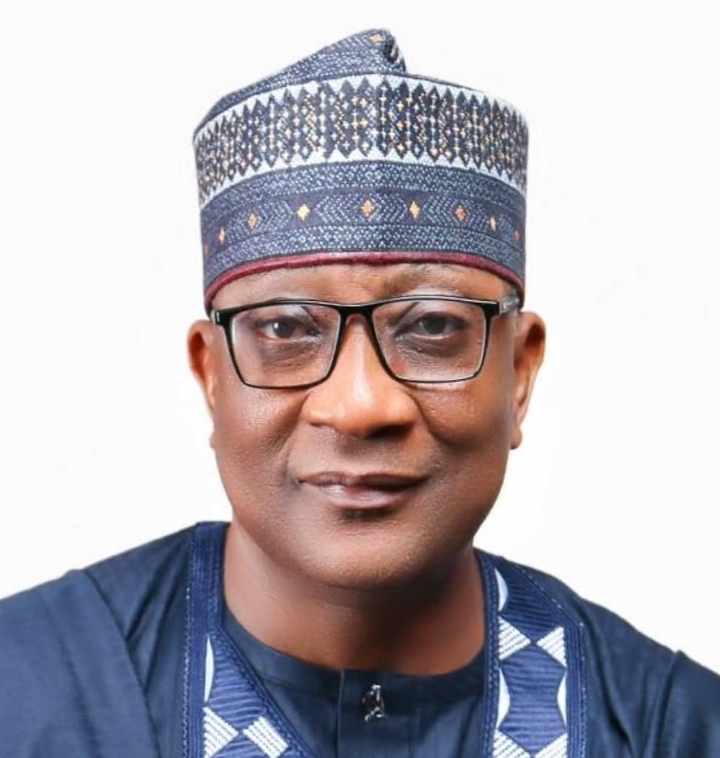
DR MOHAMMED KUDU SANTURAKI IS UNFIT TO BE CHAIRMAN GOVERNING COUNCIL OF FUT MINNA
Written By ASUU Chairman FUTMinna Minna Prof Luqman Kunle Oyewobi
The unfolding controversy over the Bosso Campus of the Federal University of Technology, Minna (FUTMINNA) has not only exposed tensions between federal and state interests but has also brought into sharp focus a deeper concern—leadership failure at the highest level of the university’s governance structure. At a time when clarity, courage, and institutional loyalty were most required, the conduct of the Chairman of the Governing Council, Dr. Mohammed Kudu Santuraki, has raised serious questions about his fitness to continue in office.
When the dispute escalated and stakeholders within the university—staff, students, alumni, and unions—peacefully mobilised to defend what they believe to be a legally acquired federal asset, the matter rightly drew the attention of the Honourable Minister of Education, Maruf Tunji Alausa. In response, all parties were summoned to Abuja for a high-level intervention. This meeting presented a critical opportunity for the university to articulate its position, anchored on law, documentation, and institutional precedent.
Ordinarily, the responsibility to lead the university’s delegation at such a crucial juncture rest squarely with the Pro-Chancellor and Chairman of Council. Yet, in a move that has troubled many observers, Dr. Santuraki failed to uphold this duty. Instead of standing firmly with the institution he was appointed to serve, he reportedly arrived alongside the Niger State delegation led by Governor Mohammed Umaru Bago. This singular act, both symbolic and substantive, sent a deeply unsettling message about where his allegiance lay.
The optics were compounded by reports that he held a prior meeting with the Minister alongside the state delegation before joining the general session. Although he later moved to sit with the university team during proceedings, the damage had already been done. Leadership, especially in moments of crisis, is not merely about physical presence—it is about visible, unwavering commitment to duty. In this regard, the Chairman’s actions fell short of expectation.
Equally concerning was the manner in which the meeting itself was conducted. Journalists were reportedly asked to leave the room, limiting transparency. Despite having received extensive documentation from the Vice-Chancellor detailing the legal acquisition of the Bosso Campus and the absence of any lease agreement, the Minister appeared to sidestep these substantive issues. Notably absent from the deliberations was the National Universities Commission (NUC), the very statutory body that facilitated the 1983 transfer of the property and issued the 2014 directive affirming that take-off campuses of federal universities are permanent and non-revertible.
Rather than grounding his intervention in these legal and institutional realities, the Minister reportedly proposed a “co-sharing” arrangement between the university and the Niger State Government. This recommendation, lacking any clear legal basis, has been widely interpreted as a political compromise rather than a jurisprudential solution. Even more troubling were reports of threats directed at the Vice-Chancellor—an office protected by the provisions of the University Miscellaneous Act. Such actions, if accurately represented, undermine the rule of law and the autonomy of university governance.
Yet, in the midst of these irregularities, what stands out most starkly is the apparent willingness of the Chairman of Council to embrace and potentially implement a decision that runs contrary to established law and institutional interest. By reportedly moving swiftly to align with the state government’s position, Dr. Santuraki has reinforced concerns that his loyalty may be divided—tilting toward political considerations rather than statutory obligations.
This is particularly troubling when viewed against the clear provisions of the law establishing federal universities in Nigeria. The Governing Council, under Section 6, is entrusted with the “general control and superintendence of the policy, finances and property of the University.” This is not a ceremonial role; it is a fiduciary responsibility. The Chairman, as head of that council, is expected to act as the foremost guardian of the university’s assets and autonomy. Any deviation from this duty is not merely an administrative lapse—it is a breach of trust.
The principle underpinning the appointment of Pro-Chancellors further reinforces this expectation. Typically, individuals appointed to chair governing councils are selected from outside the host state to ensure impartial oversight and to safeguard national integration. In this context, the appointment of an indigene of Niger State, Dr. Santuraki, as Chairman of a federal university located within the same state raises legitimate concerns.
The events surrounding the Bosso Campus dispute have, unfortunately, amplified those concerns, suggesting that the very safeguards designed to ensure neutrality may have been compromised.
History offers instructive contrasts. There have been instances where university leadership has stood firm against external pressures to protect institutional assets and integrity. Such examples underscore the standard expected of those entrusted with governance roles. Where that standard is not met, accountability must follow.
The implications of inaction are far-reaching. If a Chairman of Council can be perceived as aligning with external interests against the institution he is meant to defend, it sets a dangerous precedent—not only for FUTMINNA but for federal universities across Nigeria. It risks eroding confidence in governance structures, weakening institutional autonomy, and exposing public assets to undue political influence.
This is, therefore, not merely a question of individual conduct; it is a matter of institutional survival and national interest. The integrity of Nigeria’s higher education system depends on leaders who are willing to uphold the law, defend their institutions, and act without fear or favour.
In light of the foregoing, the case for the removal of Dr. Mohammed Kudu Santuraki as Chairman of the Governing Council of FUTMINNA is both compelling and urgent. His actions, as presented, reflect a pattern of conduct inconsistent with the responsibilities of his office. To restore confidence, safeguard institutional integrity, and reaffirm the supremacy of law over expediency, decisive action must be taken.
Ultimately, leadership is tested not in moments of comfort, but in times of challenge. When the stakes are high, neutrality is not enough—one must stand on the side of truth, law, and institutional duty. Where that standard is not met, the call for change becomes not just justified, but necessary.
The Chairman of the Governing Council of FUTMINNA, Dr. Mohammed Kudu Santuraki MUST GO.







Comments are closed