


Redefining Infrastructure and Public Service Delivery in Niger State (PART 1)
By Abdullberqy Ebbo
Three years into the administration of Governor Umaru Bago, Niger State is witnessing development on a scale rarely witnessed in its modern history.
Across the state, the evidence is visible, not merely in policy documents or government briefings, but in concrete structures, expanding road corridors, urban renewal, and a healthcare system steadily in progress form.
Let me begin by giving a summary of what’s going in road infrastructure.
Perhaps the most visible hallmark of the administration is its unprecedented investment in road infrastructure and urban renewal.
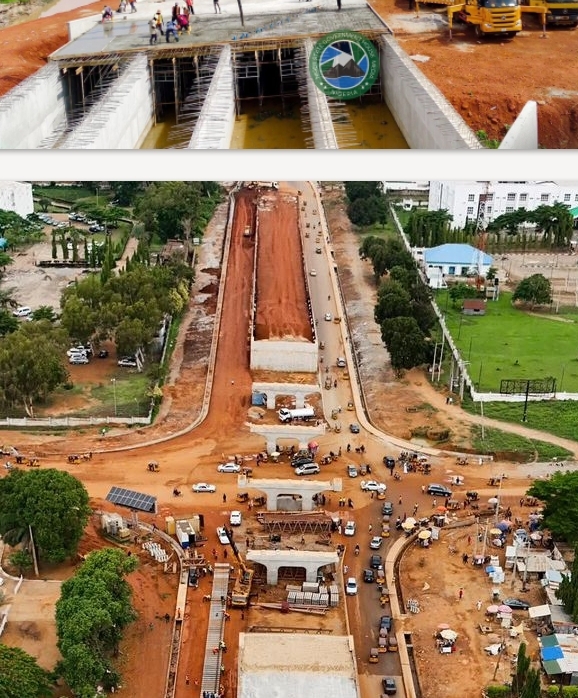
For the first time in our history, 3 overhead bridges are under construction simultaneously. In Minna, the state capital, the ongoing expansion of the Chanchaga Bridge–City Gate road from 4 lanes to 6 lanes is reshaping one of the city’s most strategic transport routes which is about 11 kilometres, if you know the road before or have used it, you’ll appreciate Governor Bago.
Beyond flagship projects, road construction has become a defining feature in Minna. The city is currently benefiting from well over 100 kilometres of interconnected road networks from Bosso Low-Cost, Tunga, Maitunbi, the Eastern Bypass, Kure Market, Sauka Ka Huta, Type B Quarters, London Street, Flayout, Odouye Quarters, Farm Centre, Standard Hospital Road, Unguwan Rahama, Prison Road and numerous other MANY MORE.
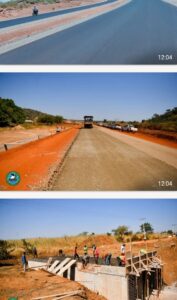
Indeed, it is difficult to identify many parts of Minna that have not experienced some form of road intervention. The scale of construction is such that urban renewal is no longer confined to the city centre but extends deep into residential areas.
The development is not limited to the capital. Across all 25 local government headquarters, road construction projects are ongoing with many completed. While some local government areas are receiving a minimum of five kilometres of urban roads, larger metropolitan centres are benefitting from substantially longer networks, in some cases exceeding one hundred kilometres.
One of Governor Bago’s biggest achievement is the reconstruction and dualisation of the Minna-Bida Road, a project that has long served as one of the state’s most important economic arteries with 2 successful administrations doing their best on it but couldn’t finish but now Governor is performing the magic by completing the project. The project has recorded over 50% completion.
Another legacy project is the ongoing construction of the 44km Bida Ring Road dualization. Conceived by the Governor, the ring road is expected to unlock new residential, commercial and industrial opportunities around Bida, creating the foundation for future metropolitan growth and positioning the ancient city for a new phase of economic development.
Further north, the over 90km
Kontagora-Rijau Road is gradually addressing a challenge that residents have endured for more than 3 decades. Historically associated with difficult travel conditions, prolonged journey times and recurring vehicle damage, the project is already improving mobility even before full completion.
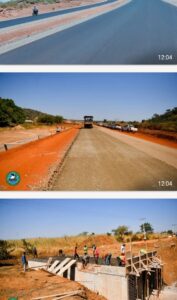
In Kontagora, the township road projects inherited from former Governor Abu Sani Bello have continued under Governor Bago’s leadership, demonstrating continuity in governance rather than abandonment of inherited initiatives.
Similar projects are ongoing in Suleja and other major urban centres across the state.
The completed 42km Paiko-Lapai road too
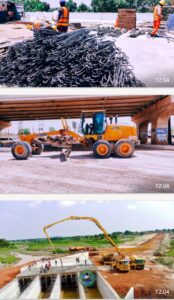
Governor Bago’s urban renewal and road construction has exceeded over 1000km statewide, with more than half of the projects completed. By any measure, it represents one of the most ambitious infrastructure drives in our history as a state.
Now let’s talk about the health sector.
While roads dominate public attention, healthcare may ultimately emerge as one of the administration’s most performing sector.
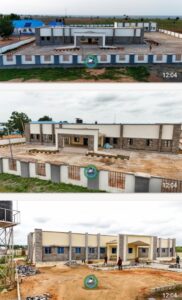
Niger State has earned national recognition for its investment in Level 2 Primary Healthcare Centres, facilities designed to deliver services far beyond traditional primary healthcare standards. Equipped with 24/7 electricity, laboratories, theatres, pharmacies and staff accommodation, these centres are expanding access to quality healthcare in communities.
About 20 level 2 primary health cares are currently in operation another 80 has been awarded.
At the secondary and tertiary levels, the Ibrahim Badamasi Babangida Specialist Hospital has undergone extensive modernization. The facility has a newly remodeled Intensive Care Unit, additional clinical infrastructure through a 26 unit modular expansion, and a growing inventory of advanced medical technology.
The hospital recently recorded a successful brain surgery. First time ever.
The facility is now equipped with modern diagnostic and treatment systems, including CT scan machines, haemodialysis units, fully automated laboratory systems, echocardiography equipment, digital X-ray systems, ultrasound machines, ventilators, patient monitoring systems, infusion pumps, defibrillators, oxygen delivery infrastructure and advanced surgical theatre installations.
The hospital has also expanded its endoscopic capabilities through the acquisition of specialized lower gastrointestinal endoscopy equipment, including endoscopy towers, high definition monitors, camera systems, telescopes, resectoscopes and associated surgical accessories.
These investments are gradually turning the healthcare of the state from one focused primarily on basic service delivery to one capable of providing specialized care, reducing the need for patients to seek treatment outside the state.
To be continued in Part II: Agriculture, investment promotion, education, public sector reforms and the broader economic implications of the New Niger development agenda.
Falle biyu ce








Comments are closed